
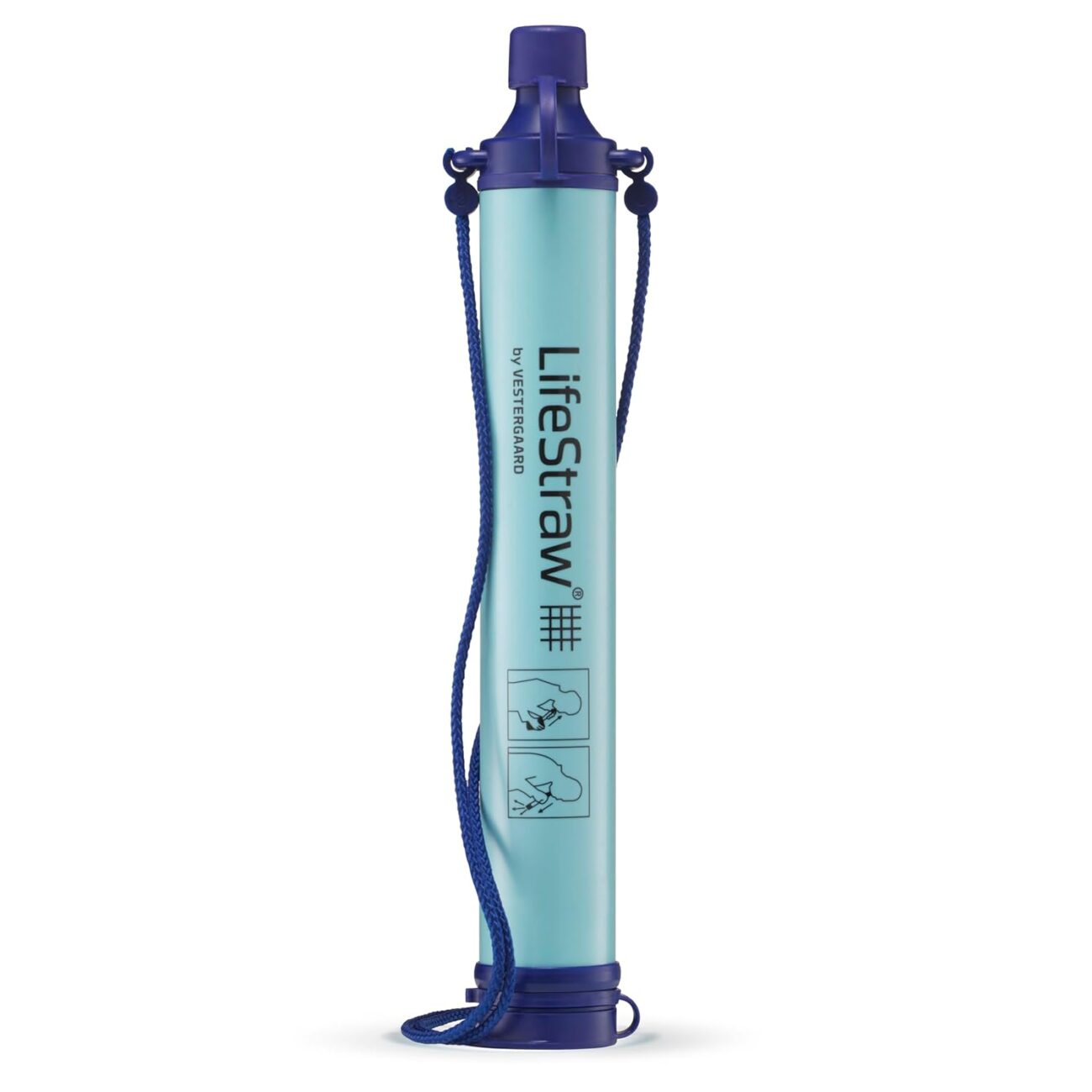

LifeStraw Personal Water Filter for Hiking, Travel and Emergency, Blue, 1PK – A Detailed Review
Introduction
Access to clean drinking water is a fundamental necessity for anyone who ventures outdoors, travels across diverse regions, or prepares for emergency situations. The LifeStraw Personal Water Filter for Hiking, Travel and Emergency, Blue, 1PK is marketed as a solution designed to address this need. While the product’s title conveys its intended purpose and basic packaging, the information available from the supplied source does not provide specific technical details, materials, or performance metrics. This review aims to present a comprehensive overview based solely on the explicit facts supplied, while also offering general guidance on evaluating portable water filtration devices. By focusing on the product’s stated use cases and the broader context of personal water filters, readers can make informed decisions without relying on unverified claims.
Product Overview
The product in question is identified by its title: LifeStraw Personal Water Filter for Hiking, Travel and Emergency, Blue, 1PK. From this, we can confirm that the item is a personal water filter, presumably intended for individual use. The name indicates that it is suitable for hiking, travel, and emergency scenarios, suggesting that it is designed to be lightweight, portable, and easy to deploy in a variety of settings. The descriptor “Blue” likely refers to the color of the filter or its packaging. The notation “1PK” indicates that the product is sold as a single unit, rather than in a multi-pack or bundle. No additional information regarding dimensions, weight, filtration capacity, or materials is provided in the extracted data.
Features (Based on Available Information)
Because the extracted description does not list any features, we cannot confirm specific attributes such as filtration technology, pore size, flow rate, or durability. The only attributes that can be stated with certainty are those implied by the product title: it is a personal water filter intended for use during hiking, travel, and emergency situations. The product is sold in a single-pack configuration and is available in a blue variant. No further details—such as the presence of a built‑in bottle, a mouthpiece, or a filter cartridge—are available from the supplied data.
Potential Practical Benefits (Cautiously Presented)
Given the product’s stated purpose, it is reasonable to anticipate that it could provide a convenient means of making water safe for consumption in outdoor or emergency contexts. Portable water filters in general can reduce the risk of waterborne illnesses by removing bacteria, protozoa, and sometimes viruses, depending on their design. A personal filter may also offer the advantage of being lightweight and easy to carry, which is particularly valuable for hikers or travelers who wish to minimize gear weight. In emergency situations, having a reliable source of potable water can be critical, and a personal filter could serve as a backup to other water purification methods.
However, it is essential to emphasize that these potential benefits are inferred from the product’s intended use rather than confirmed by specific data about this particular model. The actual performance, reliability, and suitability of the filter for any given scenario cannot be verified without additional information.
Limitations and Unknowns
The most significant limitation of this review is the absence of concrete specifications. Key questions remain unanswered: What filtration technology does the product employ? What is its pore size or filtration efficiency? How many liters of water can it process before the filter requires replacement or cleaning? What materials are used in its construction, and how durable are they under repeated use? Does the filter have a built‑in bottle or a separate container? What is the recommended maintenance routine? Without answers to these questions, consumers cannot fully assess whether the product meets their needs.
Additionally, the lack of information on the product’s weight, dimensions, and packaging means that users cannot determine how it will fit into their existing gear or travel plans. The absence of data on the filter’s lifespan and replacement schedule also poses a challenge for long‑term planning, especially for those who rely on such devices for extended expeditions or prolonged emergency preparedness.
Suitable Use Cases (Conditionally Framed)
Based on the product title, the filter is positioned for three primary contexts: hiking, travel, and emergency. Each of these scenarios has distinct requirements that a personal water filter might address:
- Hiking: When traversing wilderness areas, hikers often encounter natural water sources such as streams, rivers, or lakes. A lightweight, personal filter can provide a quick and reliable method to treat water on the trail, reducing the need to carry large volumes of bottled water.
- Travel: Travelers, especially those visiting regions with variable water quality, may benefit from a portable filter that can be used in hotels, hostels, or local eateries. The convenience of a single‑pack filter can simplify packing and reduce reliance on bottled water.
- Emergency: In disaster or evacuation scenarios, access to clean water may be limited. A personal filter can serve as a critical tool for ensuring safe drinking water when conventional supplies are unavailable.
While these use cases align with the product’s marketing, the absence of detailed performance data means that users should verify that the filter’s capabilities match the specific demands of each scenario. For instance, a filter that is effective against bacteria may not be sufficient for viral contamination, which could be relevant in certain emergency contexts.
Buying Considerations
When evaluating a personal water filter such as the LifeStraw model described, buyers should consider the following factors, keeping in mind that the available information does not confirm any of these attributes for the specific product:
- Filtration Technology: Identify whether the filter uses mechanical filtration, activated carbon, UV treatment, or a combination. Each technology has strengths and limitations regarding the types of contaminants it can remove.
- Pore Size and Efficiency: Determine the filter’s pore size (often measured in microns) and its documented efficiency against bacteria, protozoa, and viruses. A smaller pore size generally indicates higher filtration capability but may also reduce flow rate.
- Capacity and Replacement: Assess how many liters of water the filter can process before the filter media needs replacement or cleaning. Consider the availability and cost of replacement cartridges if applicable.
- Weight and Size: Evaluate the product’s weight and dimensions to ensure it fits comfortably into backpacks, travel luggage, or emergency kits.
- Durability and Materials: Examine the construction materials for resistance to impact, abrasion, and environmental conditions such as temperature extremes.
- Maintenance Requirements: Understand the cleaning or replacement schedule, and whether the filter can be rinsed or requires specialized cleaning solutions.
- Certification and Testing: Look for certifications from recognized bodies (e.g., NSF, ISO) that verify the filter’s performance claims.
- Warranty and Support: Check the warranty period and the manufacturer’s support options in case of defects or performance issues.
- Price and Value: Compare the cost of the filter and any necessary accessories (e.g., replacement cartridges) with similar products on the market.
- User Reviews and Feedback: While the current data set does not provide customer opinions, reviewing independent user feedback can offer insights into real‑world performance and reliability.
Because the extracted data does not confirm any of these attributes for the LifeStraw Personal Water Filter in question, potential buyers should seek additional information from the manufacturer’s official website, reputable retailers, or independent testing organizations before making a purchase decision.
Conclusion
The LifeStraw Personal Water Filter for Hiking, Travel and Emergency, Blue, 1PK is marketed as a portable solution for individuals who need safe drinking water while hiking, traveling, or preparing for emergencies. The product’s title suggests that it is lightweight, single‑pack, and available in a blue color variant. However, the available information does not provide any specific technical details, performance metrics, or user experiences. As a result, consumers cannot fully evaluate the filter’s suitability for their particular needs based solely on the supplied data.
For those considering this product, it is advisable to gather additional information regarding filtration technology, capacity, durability, and maintenance. Comparing these details with other personal water filters on the market will help determine whether the LifeStraw model meets the required safety standards and practical expectations for hiking, travel, or emergency use.
In summary, while the product’s intended purpose aligns with common needs for portable water purification, the lack of explicit specifications and performance data means that buyers should exercise caution and seek further verification before relying on this filter for critical water safety applications.